Saturday, September 13, 2008

SATURDAY SPORTS WRAP: Sept 12-13

Franklin H.S. blanked by Mooresville
A muddy field assisted the relentless ground attack of the Mooresville Pioneers and hindered the passing game of visiting Franklin Friday night, leading to a 29-0 victory for Mooresville. This was the Grizzly Cubs' first conference game this year. Overall, they are now 2-2, whereas Mooresville, last ranked #12 in the state 4A poll, is undefeated at 4-0. Franklin will try to get its first conference win next Friday night at home against Decatur Central.

Franklin College defeats Butler
In a game filled with sloppiness unrelated to field conditions, Franklin rode a strong second half to a 31-28 victory over Division I-AA foe Butler University at the Butler Bowl. Multiple fumbles, drops, interceptions, long drives that ended without scores, a blocked punt, and a recovered onside kick were among the unusual elements that marked this game. The Grizzlies played a sluggish first half, scoring only 7 points, but roared out in the second half, scoring the first 17 and then hanging on to win.

Butler and Franklin have played 53 times over the years, but this was the first game between the two schools since 1987.

Thursday, September 11, 2008

FRIDAY FOTO: My Old Girl

THURSDAY THINGAMAJIG: Random Thoughts on Manual Labor

Over Labor Day weekend, at our house, we labored, Gail and I. Out with the sedentary! On with the strenuous!

We prepared, cleaned and painted our three-level deck (at least one year overdue for refurbishing), shoveled and wheeled and lugged dirt to areas in our back yard where we are trying again to make grass grow, carried bricks and used them to mark off an area for plants and ground cover and then set them in the ground, hoed weeds and raked soil, sowed grass seed, hauled straw, chopped down most of an old apple tree that had died in last summer's drought, and trimmed bushes grown wild and high and all convoluted through neglect.

Sweat constantly blurred my glasses and soaked my shirt. Blisters, cuts and scrapes appeared on hands and legs. At night the muscles in my lower back screamed at me. I'm sure I drank gallons of iced tea. After showering at night we collapsed into bed. I can't speak for Gail, but I continued to haul dirt all night in my dreams, back and forth, back and forth, tossing and turning in the bed with each barrow full. Next morning, somehow, we dragged ourselves from under the covers and went at it again.

Nothing has felt so good in a long time.


"It is not possible to devalue the body and value the soul."

(Wendell Berry)

Tuesday, September 9, 2008

WEDNESDAY QWOTE: Amusing Ourselves to Death

In her book, Reaching Out without Dumbing Down, Marva Dawn quotes Neil Postman's seminal study, Amusing Ourselves to Death: Public Discourse in the Age of Show Business. Postman says that there are two visions of the way a culture may become oppressive—the way which George Orwell foresaw, or the way of Aldous Huxley.

Orwell saw culture becoming a prison, as "Big Brother" controls every aspect of life. Huxley, on the other hand, saw culture becoming a burlesque, in which citizens are perpetually entertained, to their doom.

Here's the quote:
What Huxley teaches is that in the age of advanced technology, spiritual devastation is more likely to come from an enemy with a smiling face than from one whose countenance exudes suspicion and hate. In the Huxleyan prophecy, Big Brother does not watch us, by his choice. We watch him, by ours. There is no need for wardens or gates or Ministries of Truth. When a population becomes distracted by trivia, when cultural life is redefined as a perpetual round of entertainments, when serious public conversation becomes a form of baby-talk, when, in short, a people become an audience and their public business a vaudeville act, then a nation finds itself at risk; culture-death is a clear possibility.
Neil Postman, Amusing Ourselves to Death: Public Discourse in the Age of Show Business (New York: Viking Penguin, 1985), pp. 155-56.

TUESDAY TRAVELS: Violence against Christians in Orissa

Gail and I have had the privilege of taking several mission trips to India since 1996 to work with India YFC. These have been perspective-altering and life-changing experiences for us. Our first trips took us to the state of Orissa in eastern India.

Recently, disturbing and frightening reports have been emerging from Orissa about communal violence by radical Hindus against Christians. The BBC World Service reported on Aug. 26 that the killing of a prominent Hindu leader has been used as a pretext to attack the Christian community, to burn churches and Christian sites, and perpetrate violent acts against individuals and families who profess to follow Christ.

Yesterday's Hindu newspaper cited a protest by The Federation of Indian Christian Organisations in North America, calling what is happening as "ethnic cleansing by Hindu fundamentalist outfits." They claim that "Hundreds of Christian houses had been set afire and more than 60,000 Christians were hiding in forests without food and water. Also, the number of missing persons was rising..."

A blog has been created to update the world about the violence in Orissa, called, "Orissa Burning." Please be informed, pray, and act as you are able to seek peace in this situation.

Monday, September 8, 2008

MONDAY MUSINGS: Why One Person Left Church

Thanks again to the Internet Monk for introducing me to a fellow traveler in the "post-evangelical wilderness." Her name is Julie Neidlinger, and she blogs at loneprairie.net.

Awhile back she wrote a post called, "Why I Walked Out of Church," which has apparently created quite a stir. In it she writes...
I believe what I believe -- my Christian faith -- not because of tradition or because I was raised that way. Not because I want fire insurance or hell-avoidance. Not because I want to find a group or place to belong. I believe it on my own, I believe it to be real, I believe it to be important and valid, and I believe the way we have made Christianity out to be is completely wrong. And that's why I have such a hard time going to church as it is now done.
Inspired by her rage at reading a story on "NextGen Worship," Julie both rants and reflects on why so much of contemporary Christian practice, with its emphasis on "relevance," its "perpetual youth group culture," its segregation of ages and its "focus on the family," along with the attendant patronization of singles, is a huge turn-off for a growing number of thoughtful people.

I encourage you to read it, mull it over and see if you agree. If you feel like commenting, I'd love to hear what you think.

Sunday, September 7, 2008

pSunday Psalms: PSALM 121

MAY THE ROAD RISE UP TO MEET YOU

Psalm 121 is the best known psalm in the collection of Psalms of Ascents. It is a song about traveling and trust.

Many have memorized the familiar strains of verse one in the KJV, “I will lift up mine eyes unto the hills, from whence cometh my help…” These words are more accurately translated in newer versions with a question mark after the second line. The pilgrim’s help does NOT come from the hills. The high places are the abode of false gods. However, the one living and true God made, not only the mountains, but also the skies and land—all creation. Thus, the hills are not so much a symbol of God’s power in this psalm as a picture of how the greatest metaphors of might in creation are as nothing in the light of the Creator’s greatness. Nothing, no one in the universe can help us like the living God.

The main structural feature of Ps 121 is the change of pronouns, from first person in verses 1-2, to second person in the rest of the psalm.
  • The pilgrim himself speaks in the first two verses.
  • The community of faith that supports the pilgrim in his journey answers him in verses 3-8.
Picture, if you will, a man standing with his bags packed, prepared to set off down the road. Gathered around him are his family and friends. They have come together to wish him Godspeed and to assure him of their confidence in the Lord’s blessing on his journey. First, the pilgrim addresses his friends, expressing his own faith in God’s help. Then, in a refrain of agreement, his brothers and sisters express their faith that the Lord will indeed continually care for him and protect him from the dangers that often beset travelers.

What do we learn from this psalm?
  • The journey requires faith in a God who is bigger than the creation in which we find ourselves, with all its mysteries and challenges.
  • The faith we hold is both personal and communal. We must be able to speak our faith to one another in ways that support and encourage one another on the journey.
We do not travel alone. Our God keeps us. Our friends support us.
May the road rise up to meet you.
May the wind be always at your back.

May the sun shine warm upon your face;

the rains fall soft upon your fields
And until we meet again,

May God hold you in the palm of His hand.


Traditional Gaelic Blessing

Ninth-Inning Woes

Sean Marshall pitched well (1 run and 3 hits over 6 innings), but the Cubs stranded too many runners, and Kerry Wood couldn't hold the Reds in the bottom of the ninth inning. Result? Cubs lose a heartbreaker, 4-3.

It was a beautiful day in Cincinnati, a great view from the upper deck, a sense of camaraderie in a stadium mostly filled with Cubs' fans, and a pleasant afternoon at the ballpark over all. It was also a good family day, as Gail and I enjoyed going with my folks to the game before they left to return home to Tenn.

At least the Brewers lost too, so the Cubs lost no ground and maintain their four-game lead in the standings.


Photos from chicagosports.com


Saturday, September 6, 2008

FC Wins Opener

On a perfect late summer day, the Franklin College Grizzlies opened the 2008 season with a win on their home field over Baldwin-Wallace, 42-35.

You can go HERE to read the full story of the exciting victory.

We had a great time with friends and family, including my parents who drove in from Tennessee for a weekend of football with our boys and then a trip to the Cubs game in Cincinnati tomorrow.

Friday, September 5, 2008

Franklin Humbled by Shelbyville

The Franklin HS football team was humbled on their home field Friday night, 47-14, by local rival Shelbyville. It was the first loss for the Grizzly Cubs. Shelbyville, a top-ten ranked team in class 4A, is undefeated and has scored in the 40's in each of its games. They may be good, but Franklin sealed their own doom with multiple turnovers in the first half. The Golden Bears kept getting the ball deep in Franklin territory through Grizzly Cub giveaways, leading to relatively easy scores and sealing the deal long before the first half was over.

Next week Coach McClure's Franklin squad hopes to bounce back against tough conference foe, Mooresville.

Saturday, August 30, 2008

pSunday Psalms: PSALM 120

A PERSON OF PEACE IN A LAND OF LIES

The first psalm in the collection of “Psalms of Ascent” is not about the journey, but about where the journey begins. In Psalm 120, the pilgrim going to Jerusalem describes where he lives and laments the spiritual conditions there.

The general situation is one of “trouble” (1) and “war” (7). Where he lives, the person of faith feels continually opposed and oppressed. Specifically, he lives in a community that promotes lies and deceit (2-4). He likens his situation to living in “Meshech” and “Kedar,” places known for continual warfare and hostility (5).

In the Book of Psalms, the "Songs of Ascent" are found in Book V, the book of hope for returned exiles from Babylon. Strategically placed in Book V, these psalms call them to look to Jerusalem, the place where God will provide shalom as he regathers his people and establishes his rule over all nations. Ps 120, with its emphasis on the difficult circumstances of the faithful in exile and return, sets the stage for the rest of the collection, which calls God's people to a pilgrimage of hope in Messiah's coming reign.

A third level of understanding comes when we read Ps 120 as “a prayer of the king." In this light we are reminded of the hostile environment to which Messiah Jesus came. “He came to his own, and those who were his own did not receive him” (Jn 1.12). Hebrews calls us to “consider Him who has endured such hostility by sinners against Himself” (Heb 12.3). Jesus was the ultimate person of peace in a land of lies. Yet ironically, in the midst of continual opposition, and by laying down his own life under a sentence of unjust lies, he provided ultimate peace (Rom 5.1).

Peace, or shalom, plays an important part in these psalms, appearing at key points in the collection to describe what the pilgrim seeks in and for Jerusalem and God’s people. This is, indeed, what all people long for. Shalom means wholeness, health, freedom from all oppression and trouble, relational harmony and complete wellbeing.

The new creation will be God’s Peaceable Kingdom, a place of universal shalom under the Messiah’s rule. No more trouble, lies, deceit, injustice, hostility, conflict. The feasts in Jerusalem enjoyed by the First Testament pilgrims were foretastes of that shalom. As temporary reprieves from the daily disorientation of living in Meshech and Kedar they provided a great hope and hunger for ultimate peace.

The challenge of this psalm for Christ-followers in the NT era is to be shalom-makers in the midst of our troubled world as we continue to await the coming Kingdom of peace. At times we cry out to God and lament our circumstances, yes. However, our daily faith journey with Jesus also calls us to arise, walk out into our world and say, “I am for peace.”

Saturday Scrimmage

The Franklin College Grizzlies traveled to Depauw this afternoon to participate in a warm-up scrimmage in preparation for opening Saturday next week.

The weather was grand, the teams played hard, and we're all looking forward to another exciting year.

Friday, August 29, 2008

Grizzly Cubs Prevail

The Franklin Grizzly Cubs took on Indianapolis Washington in a non-conference matchup for their second game of the season. It wasn't pretty, but Franklin won 28-18 to improve their record to 2-0. A strong defensive effort, combined with a solid running game and some timely passes led to the victory.

Next week Franklin faces a formidable foe in Shelbyville, which has been ranked in the top ten and have two impressive wins thus far this season.

Thursday, August 28, 2008

NEW NAME!

I have renamed the blog from "Mike's Studies and Pix" to "otium sanctum," a Latin phrase used by early Christians, meaning "Holy Leisure," the unhurried and unharried spirit by which we best approach life, work, relationships and communion with God.

These have always been among my favorite Christian words, and I felt it would be good to give the blog a name that provokes more thought.

The URL will not change.

Taking it easy for a few days...

Labor Day weekend has become one of the times during the year when I get a bit of a break. So I'll be hanging around the house for the next few days, catching up on projects and enjoying a respite from the normal routine.
And even if time ain't really on my side
It's one of those days for takin' a walk outside
I'm blowin' the day to take a walk in the sun
And fall on my face on somebody's new mowed lawn...

(John Sebastian, "Daydream," © Alley Music Corp/Trio Music Co Inc)

Tuesday, August 26, 2008

YOU GOTTA READ THIS...

Are you ready for a big helping of in-your-face, honest, direct, controversial, passionate, subversive, countercultural, brass tacks TRUTH?

I dare you to read iMonk's replay of his 2001 essay, "Wretched Urgency."

Comment to him, or start a conversation with me by commenting here. This is something we all need to talk about.

Sunday, August 24, 2008

pSunday Psalms


Today I will begin a series of studies, posted each Sunday, on Psalms 120-134. These are known, from their inscriptions, as the "Songs of Ascent." This post explores what that title means, and then gives a brief summary of my interpretive approach to the Book of Psalms.

SONGS OF ASCENT
The following quote from James Limburg in his Westminster Bible Companion commentary on the Psalms, gives a good overview of Psalms 120-134:
Psalm 120 is the first of a series of psalms running from 120 to 134, each of which is identified as "A Song of Ascents," literally, "A Song for the Going Up." This expression appears to refer to "going up" to Jerusalem; the same Hebrew word appears in the reference to the tribes who "go up" to Jerusalem in Psalm 122.4. This group of fifteen psalms seems to have been used for going up to Jerusalem for one of the festivals held there (see Deut 16.16), and thus these have been called pilgrimage psalms. These psalms were likely gathered together as a special collection to be used on such pilgrimages.
The Songs of Ascents are what we might call "folk psalms"—songs that reflect everyday matters like family, work, the seasons and rural life. They paint a picture of spiritual life from the perspective of the common person who experiences God's blessings in his daily routines among his neighbors in his own community. However, he also looks forward to special seasons of festive worship within the larger community of faith in Jerusalem.

READING THE PSALMS
Without offering a full explanation of how I came to these conclusions, here are the principles by which I approach reading and studying the Book of Psalms.
  • Psalms contains many individual psalms and collections of psalms that were composed by David and other Israelite worshipers. The headings sometimes clue us in on a historical setting that should guide us in reading the psalm.
  • These psalms were also used in worship settings. There are various types of psalms, and understanding the characteristics of these types can help us in our interpretations.
  • Psalms is a unified book that has a coherent message as a book. The Book of Psalms has five main divisions, and each individual psalm and collection should be read in the context of the whole book and the division in which it is found.
  • Psalms 1 and 2 introduce the book and make clear that, in its final form, its primary purpose is to serve as Torah for God's people (Ps 1) and to portray the Messiah as the Son of God who will come to rule the nations of the earth (Ps 2).
  • 2Samuel 23.1-7, correctly understood, teaches that David understood himself to be writing about "the man who was raised on high, the Messiah of the God of Jacob" (23.1).
  • The Book of Psalms, therefore, is a book that sets forth the prayers of the Messiah in order that God's people might receive instruction (Torah) in living under God's rule as they await the day when all nations will come together under his reign.
So, based on these principles, when reading a psalm, here is the approach I take:
  • Read and understand it first according to its original historical setting and psalm-type.
  • Read and understand it in the context of the entire Book of Psalms and see how it contributes to that message.
  • Read and understand it as a prayer of the Messiah. What does it tell me about him?
  • As a follower of the Messiah, one called to walk with him in his ways and under his rule, what instruction does it give me for my faith journey?
And so we will begin! As always, I'd love to have your comments.

Saturday, August 23, 2008

Turning on the Friday Night Lights...

The Franklin Grizzly Cubs started the season on a good note last evening with a convincing 35-12 win over Northview HS in Brazil, Indiana. We had 399 yards of total offense and the defense stepped up with 4 interceptions. Our son Isaac led the team in receptions with 4 for 83 yards.

Great start!

Monday, August 18, 2008

And now...at starting QB...

Helpful Way to Tell the Story

I found something helpful in Bruce Waltke's An Old Testment Theology, something I will use in my teaching and talking about the Bible (the First Testament in particular). I have adapted it somewhat already, but at the heart of what I say here is Waltke's analysis.

When discussing whether there is a "center" to the Bible's message--a core summarizing theme--Waltke points to the petition in the Lord's Prayer, "Thy kingdom come." For Waltke, the center of the Biblical message is God establishing his rule in the universe he created. This central message is played out via five components:
  1. God's people
  2. In God's land
  3. With God's laws
  4. Under the rule of God's king
  5. In order to bring God's blessing to all the earth
All these themes are present from the beginning of the Bible, and they run concurrently with varying emphasis throughout. For example, in the "Primary History" (Genesis-Kings):
  • Genesis 1-11 introduces all these themes.
  • The primary function of Genesis 12-Exodus 19 is to identify God's people.
  • The primary function of Exodus 20-Deuteronomy is to prepare them for life in the land with God's laws.
  • The primary function of Joshua-Kings is to tell the story of their life in the land with God's laws under the rule of God's king.
  • All this took place in order that Israel might be God's priests to the other nations of the world (Exodus 19.5-6).
Unfortunately, the First Testament ends with failure.
  • Israel failed to live up to their calling as God's people.
  • They failed to keep God's laws.
  • Their failures led to exile from the land, and though they physically returned, they never regained their former glory or standing.
  • God's kings had been almost unqualified disasters, leading the nation to ruin.
  • Instead of a light, they became a laughingstock among the nations.
What Israel failed to do, the One True Israelite, Jesus Christ did. More to come on that.

Evangelicalism in Chaos?

I recommend that all who are concerned about the state of the church read today's post on Jesus Creed, Scot McKnight's blog, about the book "Finding Faith, Losing Faith." Today, iMonk responds to a chapter on evangelicals converting to Roman Catholicism, a matter he is facing in his own marriage. While reflecting on the experience and commenting on the evangelical church that some are leaving, he writes these devastating words:
Evangelicalism today is chaos. Doctrinal chaos. Worship chaos. Ecclesiastical chaos. Prosperity Gospel chaos. Christian media multiplies the options and amplifies the heretics. We are more removed from our common catholic, apostolic roots than ever. We are diseased and we need a St. Francis and a Luther combined.
What do you think? Is the situation as serious as he claims?

Sunday, August 17, 2008

Report from the Church's Front Lines, continued

This morning we worshiped at another Lutheran congregation, this time one affiliated with the Missouri Synod. They are more conservative in theology than the Evangelical Lutheran Church and this was apparent in the service. There was a strong Biblical (and Lutheran) emphasis on the Gospel, with particular focus on the inability of humans to keep God's law and the work of Christ fulfilling the law and securing a righteous standing before God for those who come to him by faith alone. The pastor's message was an exposition of Romans 10, challenging the congregation to have "beautiful feet" in sharing this message with others.

In terms of worship style, the service consisted as much of non-denominational evangelical forms as liturgy. It contained liturgical elements—confession of sins and absolution, the Nicene Creed, and communion—however the service was structured around the Biblical text expounded in the message rather than Scripture and sermon fitting into a larger unity.

The building was fairly plain, with banners. The music was led by a small worship team, who sang to keyboard accompaniment and recorded music backgrounds. We sang a contemporary hymn, two praise choruses and a gospel hymn. All service elements were projected on a screen as well as written in the bulletin. One Scripture, the Gospel for the day, was read. The pastor gathered the children to the front for a children's message. During the offertory, a soloist sang and a slide show was projected.

If the pastor had not worn a robe, I could have easily imagined myself in a non-denominational evangelical, Bible-teaching congregation. The atmosphere and actions were all very familiar to us. One characteristic of the congregation that impressed me was the diversity of ages. There were lots of little children, but also a wide span of generations in worship together.

The service we attended was advertised as the "blended" service, while the later one was marked as "contemporary." I'm not sure what that means, because the first was a fairly typical contemporary evangelical worship service...plus the elements of the liturgy. Perhaps they don't sing any hymns at the second service.

More reports and reflections to come...

Thursday, August 14, 2008

Beginning of the End, End of the Beginning...

Two new eras began on Wednesday.

Our youngest son entered his senior year at Franklin Community High School and our first grandson entered Kindergarten at Northwood Elementary.

So for Isaac, this is his final humiliating picture out in the yard, carrying the backpack. (See for yourself how excited he is!) However, for Austin, it's just the start!

Wednesday, August 13, 2008

BookThots

In order to clean up this blog a bit, I have added a new blog devoted solely to BOOK REVIEWS and comments.

You can find it at: http://mikesbookthots.wordpress.com.

Please enjoy, and comment!

Mike

Sunday, August 10, 2008

Reports from the Church's Front Lines...

Here's a report of our initial experiences visiting churches over the past few weeks:
  • We have been to an Episcopal church, a non-denominational congregation, and a Lutheran church.
  • The Episcopal church was interesting to me not only because I have appreciated Prayer Book worship in the past, but also because this congregation runs a free medical clinic that serves our surrounding communities—an attractive missional ministry. We went to the early service, and I think the folks there were surprised to find visitors among them. It was a non-musical service, which in some ways was refreshing. Contemporary Christianity has so identified worship with music that it was nice to see a group that recognized the two are not the same. The rector's message was based on exegesis of a Biblical text and he was a good speaker. Though I wouldn't exactly call the message "evangelical," he communicated some true Biblical wisdom. The leaders and congregation performed the liturgy with order, joy, and a sense of shared community. We stayed for the coffee fellowship and met several folks who greeted us warmly and answered our questions. We liked the building, a quaint, lovely stone church in English country style.
  • The Non-Denominational church was a congregation where I formerly served, and we went back for Sunday worship on a special day in the life of the fellowship. Worship was led by a praise band—guitars, bass, keyboard, drums. We sang the usual contemporary choruses, until, at one point, the song leader announced with all seriousness that we were going to do a "really old" song that some might not know—and then he launched into "Our God is an awesome God." I'm glad to know we're keeping ancient traditions alive! It was communion Sunday, so we passed the bread and cups in trays. The youth pastor preached, using multimedia to introduce his theme and then exegeting a passage from Ephesians 4 with a strong moralistic emphasis. Their building is casual and utilitarian, plain with banners and a cross in the front of the sanctuary.
  • Today we attended the early service at a local Lutheran church. Once again, people seemed a bit surprised to see visitors, but they gradually approached and welcomed us. The building was architecturally pleasing, light and airy with a large foyer for fellowship that had a coffee cafe and outdoor patio. The sanctuary was also filled with light and configured so that one's attention was continually directed upward. (See the picture above for an exterior view.) The liturgy was simple, relaxed and refreshing, the music accompanied by piano. The congregation sang hymns and other responses, and a soloist performed as well. The pastor was a fine speaker, with a good sense of humor and connection to the congregation. He spoke on a Gospel passage, and once again, it was not overtly evangelical, but he brought out some of the text's pertinent points with skill and insight.
More reports to come...

Friday, August 8, 2008

Where's a Pastor to Go?

How does a pastor find a church when he is between churches? What does his family do when their life has been built around the routines of church life, and then the rhythm changes?

We are between churches right now, a situation I have rarely faced in my adult life. The first time I was a "homeless" believer was when Gail and Abby and I left our first pastorate and moved from Vermont to Chicago to attend seminary. Within a few weeks we were in the fold again, at Waukegan Bible Church.

The second time was when I stepped down from the church in our town of Franklin, IN, but decided against moving from the community. It is not an easy thing for a pastor to live in the same place where he served and find a church home. That was almost four years ago, and we still have not found a permanent resting place.

In the interim I have done some part-time ministry and we have attended churches, but our family has never become intimately connected for any extended period with those congregations. Just recently, I completed my pastoral duties with a small group here in town and now we're looking again.

What are we looking for? Apparently something hard to find!
  • A TEACHING CHURCH. A church that is strongly evangelical but not doctrinaire; one that teaches the Bible with depth and insight, but which also allows discussion, diversity of conviction, and room to grow in areas where Christians differ.
  • A WORSHIPING CHURCH. A congregation that understands the centrality of worship, and which appreciates traditional as well as contemporary forms and styles of praising God and celebrating the Gospel.
  • A SIMPLE CHURCH. A fellowship that is not built around complex organization, spiritual technologies and extensive programming, but one which keeps things down to earth, encouraging and reinforcing relationships forged and lived out in the daily routines of real life.
  • A MISSIONAL CHURCH. A service-oriented group that equips its members to honor Christ and share his love and Good News in real-life situations, with their neighbors and in the community, not just in the "holy huddle" of the church building or program.
These are the emphases I crave in a church. How about you? Any suggestions for us?

Thursday, July 31, 2008

SWEEP! Cubs make Brewers look silly.

The Cubs finished a four-game sweep of the Milwaukee Brewers today, thrashing them 11-4. The Brewers fell into third place for the time being, and best of all, the Cubs proved to themselves that they could win big games away from Wrigley Field. They're going to need it at the end of the year, when they play 16 games in September and conclude the season back at Miller Park with three games against these same Brewers.

People of Faith Studying Science

Last weekend, we took our youngest son to Chicago to visit campuses to help him prepare to make a decision about college during his upcoming senior year. One issue with which Christian-based liberal arts colleges and universities must deal is how devout people approach the study of the natural sciences. Friends of ours, who are practicing scientists and people of faith, are in the college-search process too and in a recent email they lamented the poor quality and lack of emphasis on science in the Christian schools they have inquired about. This may be because Christ-followers are confused and conflicted about how to think about this subject.

While at Wheaton College in Wheaton, IL, I picked up a booklet that contains a thoughtful and well-stated summary of the foundations of their approach. You can find it online on the Wheaton College website here: Perspective on Natural Sciences.

Here are some excerpts from the statement:
In the contemporary academy, science represents a theoretical discipline that addresses natural phenomena; by its accepted standards and procedures, it does not go beyond the natural realm for explanations. The hypotheses and theories generated in scientific study are based upon empirically measured phenomena. Like all endeavors of disclosing truth, including theology, the practice of science is dynamic and the theories it generates are always in a state of self-correction as new data are evaluated. Although science uses a naturalistic methodology, the use of that methodology does not necessarily imply a metaphysical naturalism (a philosophical commitment to the idea that the material world is all there is), nor does it imply that the scientist who is a Christian believes that naturalistic factors can fully explain all phenomena.

...
At Wheaton, special emphasis is given to integration of the Christian faith with all areas of learning and applied practice. This emphasis is, in turn, rooted in our deep commitment to the complete truthfulness and authority of the Scriptures. Nevertheless, we encourage the careful examination of all worthwhile ideas in our curriculum, including those that may seem to contradict our own institutional commitments. When we confront seeming contradictions between the "findings of science" and our understanding of the teaching of Scripture, for instance, we reaffirm our belief in an inerrant Bible. However, we also humbly realize that neither our interpretations of Scripture nor the "findings of science" are without error. Hence, we carefully examine all relevant evidence to seek resolution of the seeming contradiction, but we also are willing to accept uncertainty in matters where we have insufficient certainty, either regarding the teaching of Scripture, the findings of science, or both. We approach such matters in the confidence that our God will lead us into a deeper understanding of His Truth, and that the practice of critical inquiry - grounded in trust in the truthfulness of Scripture - will prepare our students to respond wisely to the challenges they will face. In all endeavors, Wheaton College remains firmly committed to structuring its programs in service "For Christ and His Kingdom."

Aspects of our institution's confessional stance are disconcerting to many nonreligious scientists, including our confidence that Christ designed and created the physical world, that this world bears the imprint of its rational Creator, that He is the author of all life, and, especially, that He directly created the first human pair. Yet our institution's confessional stance leaves certain issues open, issues which some in the Christian community regard as properly closed. The most notable of these issues are the age of the Earth, the age of the cosmos, and the methods by which God did His work of creation. Indeed, among our faculty there are a variety of interpretations of the age of the Earth and the age of the cosmos, as well as the means used by God to create the variegated array of life on our planet. The faculty are firm in their conviction that Christ created all of humankind through the direct creation of an historical Adam and Eve. As stated earlier in this document, and of such great significance that it bears repeating here, is that we hold fast to the truth that through one man (Adam) humankind fell, and through one man (Christ) humankind is saved. While all faculty believe in the complete truthfulness and authority of Scripture, some embrace or lean toward a creationism, of the Young Earth variety, others a punctuated or progressive creationism. Nonetheless, our faculty embrace Christ's creative design and action in the created order. They strive to treat all views charitably, respectfully, and intelligently as they lead campus discussion regarding these controversial matters. We believe that we honor Christ by taking precisely this approach, and we think that this is an academically honest way to impart knowledge to our students.

Charitable. Respectful. Intelligent. Deep commitment to the truthfulness and authority of the Scriptures.

Well said.

Wednesday, July 30, 2008

Grizzlies Get Pre-Season Recognition

The article below, from the Franklin College football site, shows that the last two years of hard work and success have earned some much-deserved recognition for Coach Mike Leonard's team.

We're only about a month away, and I for one can't wait!

FRANKLIN, Ind. (July 1) – Franklin College is ranked No. 25 in the USA Today Sports Weekly magazine pre-season Division III football poll for 2008.

The recognition marks the first time the Grizzlies program has been included in the national publication’s Division III pre-season ranking.

Franklin returns 16 starters from last year’s historic team that posted a 9-2 overall record, won its first Heartland Conference championship and earned its first berth in the NCAA Division III playoffs.

Friday, July 25, 2008

Recommended Article on Interpreting Genesis

I'd like to recommend the following article by Clark Pinnock. It is called, "Climbing Out of a Swamp: The Evangelical Struggle to Understand the Creation Texts" [Interpretation 43 (1989) 143-155]

Pinnock argues convincingly (to me, anyway) for the importance of reading the Creation texts as they stand, in their ancient and authorial context first and foremost. In the end, he comes out at the position to which I have come, and I will therefore use the points made in this article when I make my case for a literary framework interpretation of Genesis 1.

He does not go far enough, however, in relating these texts to their literary context in the Torah and the Sitz im Lieben of Moses and the Israelites. I realize this may be beyond his purpose in the article, nevertheless, grasping this is essential for truly understanding the purpose and meaning of the text, and therefore arguing against those who would hijack it for other agendas, such as trying to prove a particular scientific viewpoint.

Saturday, July 19, 2008

NEW BOOK STUDY...

For the next couple of weeks, I'll be blogging on this book, THE TANGIBLE KINGDOM: Creating Incarnational Community, which finally has shown me a picture of what a truly "missional" church might look like. The authors, Hugh Halter and Matt Smay, serve among a group of congregations known as Adullam, a network of missional communities in Denver.

Some of the material I've read on "missional" ministry is still grounded in the attractional, programmatic church model. This book is truly different. It is about Christians living out their faith in the world, in relationship with their neighbors, involved in their communities, taking part in real life as the sphere where we follow Christ.

I look forward to sharing my observations with you. Hope you'll comment too.

Saturday, June 14, 2008

Album of an Era...

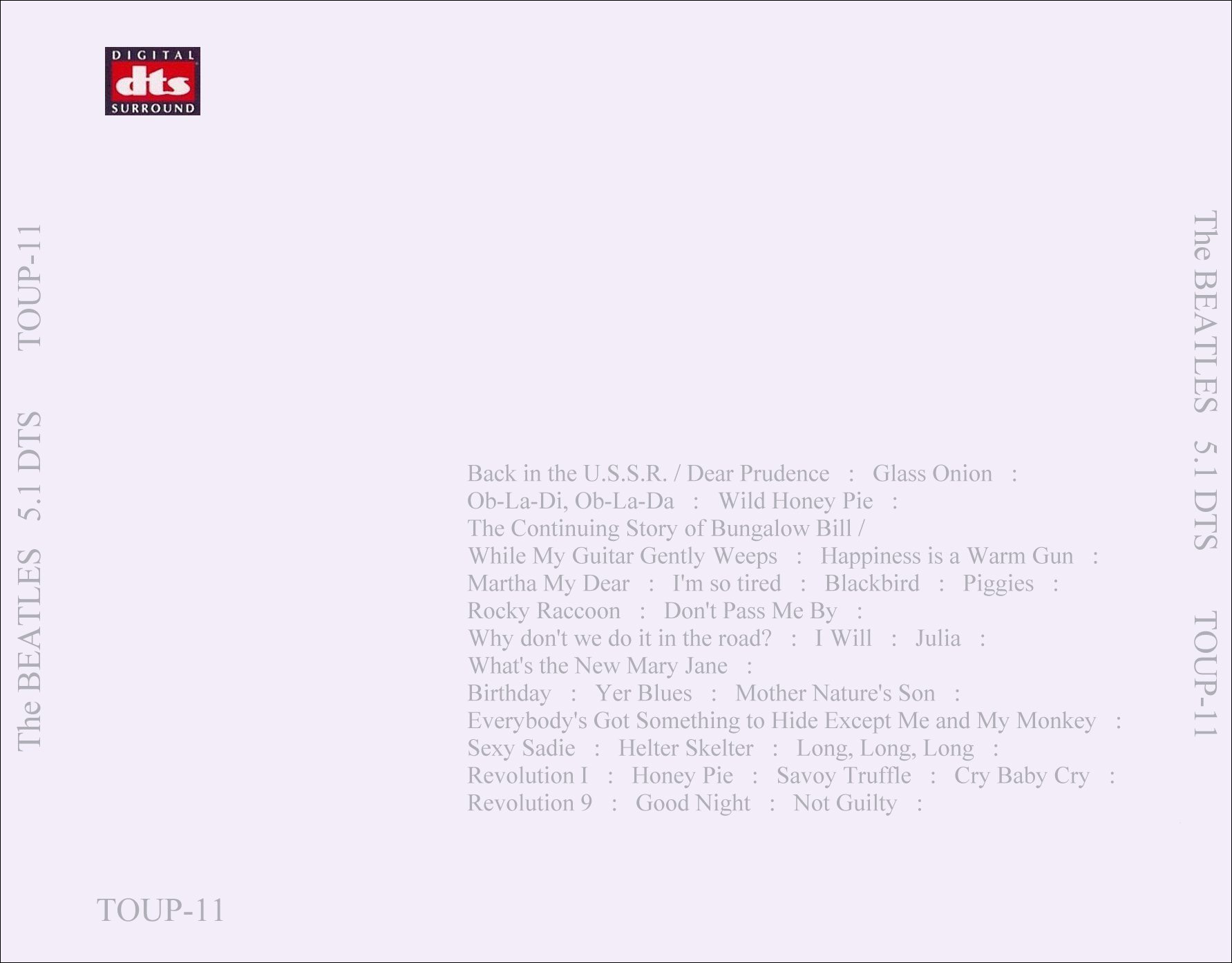
Over the past week, I've had the opportunity to enjoy a rare treat. Twice while driving, I have listened through the entire Beatles' White Album, which was released 40 years ago, on Nov. 22, 1968.

I remember that year well as a time when I was beginning to come of age. On the other hand, many thought the world itself was beginning to come to an end. 1968 was a year of profoundly painful birthpangs in the U.S. and around the world...
  • In Viet Nam...it is the year of the Tet Offensive, the Battle of Saigon, and the My Lai massacre. President Johnson orders the cessation of bombing in North Viet Nam by November. However, in the same month, 3 million tons of bombs are dropped on Laos. Student protests grow around the world.
  • Presidential politics...Lyndon Johnson announces he will not run for re-election, Bobby Kennedy is assassinated, it's Nixon/Agnew for the Republicans and Humphrey/Muskie for the Democrats after a famously riotous convention in Chicago. Nixon is elected.
  • Civil rights battles explode...Dr. King is gunned down. America's cities are on fire—sit-ins, riots and scenes of frightening urban chaos proliferate. The issue even shows up at the Mexico City Olympics with "black-power" protests.
  • Near year's end, Apollo 8 orbits the moon and for the first time in human history, people see the far side of the moon and a complete view of Earth from space. The astronauts read from Genesis.
The mood and atmosphere of such a tumultuous year could only be captured musically by the immense talent of the Beatles. Fresh off the success of their groundbreaking Sgt. Pepper album in 1967, sequestered for a season in India to meditate under the guidance of the Maharishi Mahesh Yogi, and with serious personal and creative tension and discord growing among them, the Beatles put together a wide-ranging, imaginative work that captures the prodigious skills of these four musicians at the height of their talent.

This record shares similarities with Sgt. Pepper, and it takes even greater advantage of the musical variety and technological advances that made the earlier record so innovative. In fact, I think of the White Album as Sgt. Pepper gone to seed—a further experimental "concept" album more like an encyclopedia of ideas rather than any one focused concept. As with Sgt. Pepper, the whole is greater than the sum of its parts, although, unlike Sgt. Pepper, which has only a few exceptional songs, many songs on the White Album are true classics—and have no trouble standing on their own to this day.

Critics have asserted that this album represents the work of four individuals more than that of a cohesive band, that it is uneven, that it includes debatable material (e.g. "Wild Honey Pie," "Revolution #9," etc.), that it is pretentious, overblown and would have been much tighter as a single record, and so on. However, the simple fact is that musically and culturally this is one of the greatest albums ever recorded, that both its flaws and strengths work together to create a magical world in the listener's imagination as only the Beatles could, and that when the White Album is listened to as an album, it stands as a work of musical genius that enables its hearers to journey through the crazy-making, mind-bending days of the world that was in 1968.

It blew me away back then and it still does 40 years later. I encourage you to take some time and listen to it at one sitting and see if you don't agree.

Saturday, June 7, 2008

Franklin Flooding...

We had 8 inches of rain in a 4-hour period this morning. And this after severe weather on several other occasions recently. This led to the worst flooding anyone can remember in Franklin and other communities throughout central Indiana south of Indianapolis. We will be looking for opportunities to show practical love to our neighbors in days to come.

Wednesday, June 4, 2008

Stormy Weather...

Some local news shots of the damage caused by storms and tornadoes over the past few days in and around Indianapolis. A couple of the shots are from Camp Atterbury, about 25 miles south of Indy, where 40 buildings were destroyed and millions of dollars of damage done.

Tuesday, June 3, 2008

Off to the DR!

Our son Isaac left with a group from Franklin Community Church to work with Go! Ministries in the Dominican Republic for a week. He will be in our thoughts and prayers all week, and we solicit your intercessions as well.